20 Oct 2026
Decoding Bonus Wagering Requirements in Switzerland's Mobile Gambling Applications
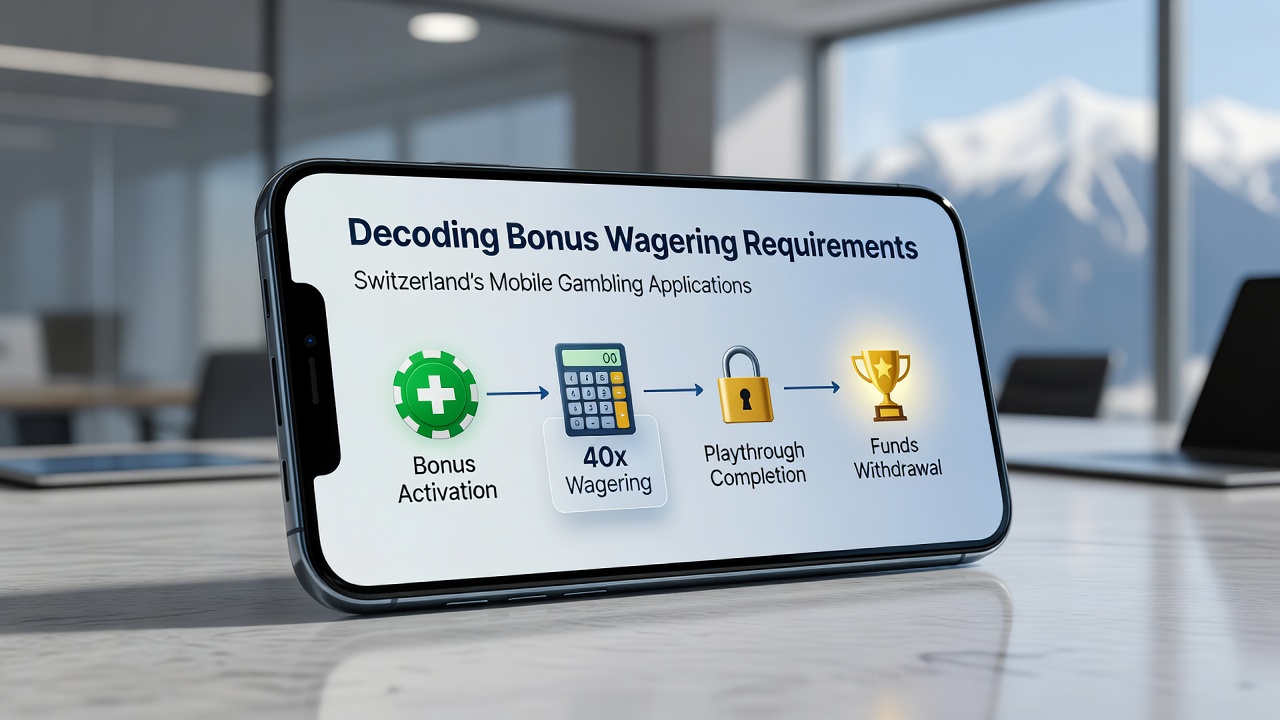
Bonus wagering requirements represent a core mechanic in Switzerland's regulated mobile gambling sector, where players must meet specific playthrough thresholds before converting bonus funds into withdrawable cash, and these rules stem directly from the Federal Act on Games of Chance along with its implementing ordinances that took effect in 2019 and received refinements through 2026. Operators design these conditions to balance player incentives with risk management, while the Swiss Federal Gaming Board oversees compliance across both land-based and digital platforms including dedicated smartphone applications.
Core Mechanics of Wagering Requirements
Wagering requirements typically calculate as a multiplier applied to the bonus amount, deposit sum, or their combination, and in Swiss mobile apps this often ranges from 20x to 40x depending on the game category selected for play, with slots contributing 100 percent toward the total while table games like blackjack or roulette may count only 10 to 20 percent. Data from the Federal Gaming Board indicates that as of October 2026 operators must display these multipliers clearly within app interfaces before any bonus activation occurs, which reduces disputes and aligns with transparency mandates under the national licensing regime.
Calculation proceeds step by step once a player accepts an offer, and the system tracks eligible bets in real time through backend software that excludes certain wagers such as those placed on progressive jackpot slots or live dealer tables unless the operator explicitly states otherwise in the terms. Players who study the fine print discover that time limits usually cap the period for completing requirements at 30 days, after which any remaining bonus balance expires automatically.
Regulatory Framework Specific to Mobile Applications
Switzerland's licensing process requires mobile gambling providers to submit detailed bonus structures for approval, and the Federal Gaming Board reviews wagering formulas to ensure they do not create unfair barriers that could encourage excessive play. Applications must incorporate geofencing technology that restricts access to users physically located within Swiss borders, while age verification systems cross-reference federal databases before allowing bonus claims. Observers note that these layered controls distinguish Swiss apps from offshore platforms that sometimes operate with looser standards.
Recent updates effective in 2026 introduced mandatory reporting on bonus redemption rates, and figures reveal that roughly 65 percent of players who accept offers in Swiss-licensed apps fail to complete their wagering targets within the allotted window according to aggregated industry statistics shared with regulatory bodies. This data drives ongoing policy discussions without altering the fundamental multiplier system already in place.
Practical Examples in Swiss Mobile Contexts
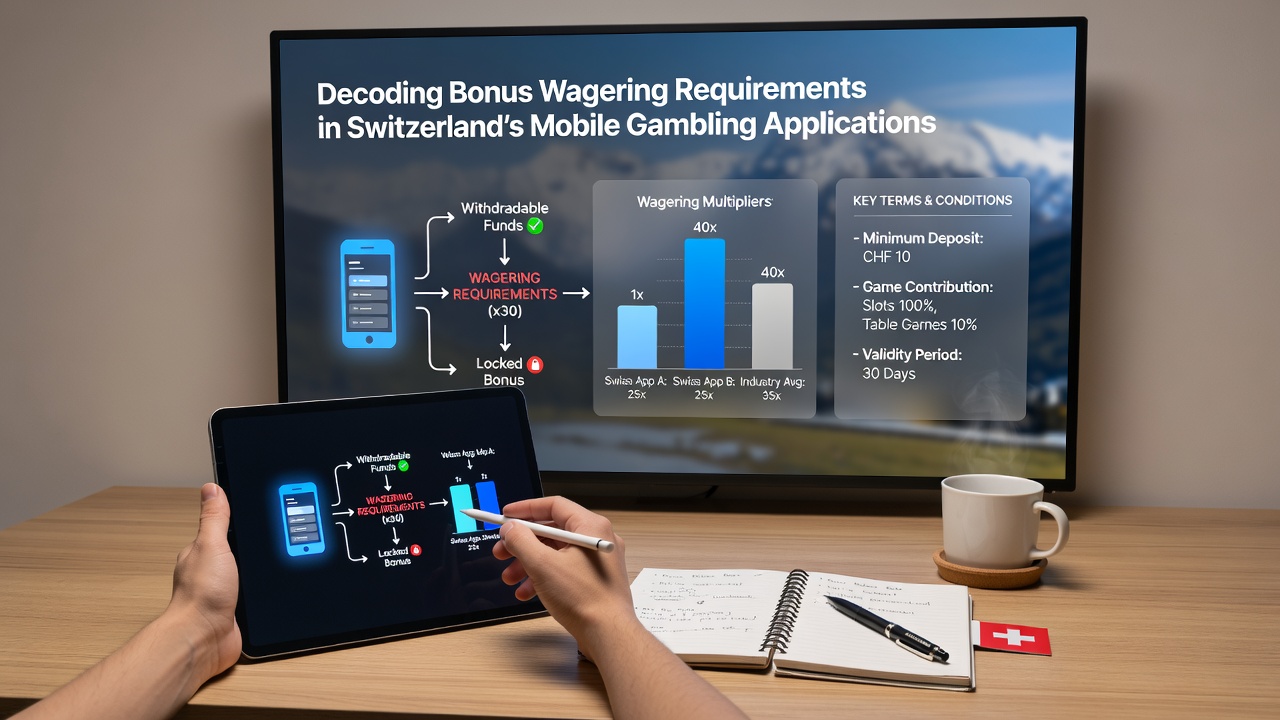
Take one common scenario where an app offers a 50 Swiss franc bonus matched to a 100 franc deposit, and the 30x requirement applies only to the bonus portion, which means the player must generate 1,500 francs in total wagers before cashing out any winnings derived from that credit. Software within the application displays a live progress bar that updates after each spin or hand, and this visual aid helps users monitor remaining obligations without needing external calculators.
Another case involves reload bonuses that carry separate wagering pools running parallel to welcome offers, and players must satisfy both sets independently even when using the same deposit. Research from academic institutions studying European gambling markets shows that such stacking mechanics appear more frequently in mobile formats because apps allow instant notifications that prompt additional deposits to chase ongoing promotions.
Game Contribution Rates and Restrictions
Contribution percentages vary by title category because regulators permit operators to adjust weighting to protect house edge margins, and video slots usually receive full credit while video poker titles might receive only partial recognition. Casino apps list these rates in dedicated help sections that users can access via menu navigation, and failure to review them leads many to underestimate the actual play volume needed. The Federal Gaming Board requires operators to maintain audit trails of all contribution calculations for potential inspection during routine compliance checks.
Time-based restrictions also intersect with wagering rules, and any bonus that remains unplayed for extended periods may trigger automatic forfeiture clauses that reset the meter. Players who switch between multiple devices must ensure the app synchronizes progress across sessions, since network interruptions can sometimes delay updates even though licensed platforms employ redundant servers to minimize such issues.
Recent Developments Through October 2026
Industry reports compiled for the third quarter of 2026 indicate steady growth in mobile bonus uptake following the rollout of enhanced verification tools that integrate with national ID systems, and this shift has streamlined the process of linking accounts to bonus eligibility without adding extra layers of manual review. Operators continue to refine their terms in response to player feedback collected through in-app surveys, yet the core mathematical structure of multipliers remains consistent with earlier regulatory guidance.
Conclusion
Decoding bonus wagering requirements ultimately comes down to understanding multipliers, contribution rates, time windows, and display obligations that Swiss mobile gambling applications must follow under federal oversight. Players benefit from reviewing these parameters directly in the app before accepting offers, while operators maintain detailed records to demonstrate ongoing compliance with the Gambling Act. The framework established through 2026 continues to emphasize clarity and auditability across all digital channels operating within Switzerland's borders.