22 Sep 2026
Switzerland's Framework for Verifying Game Randomness Across Digital Platforms

Switzerland maintains a structured system for confirming randomness in games offered on digital platforms, and this approach draws on national legislation together with technical standards enforced by federal authorities. The framework requires operators to submit their random number generators for evaluation before deployment, and it continues to evolve with updates to testing protocols as technology advances. Observers note that these measures apply to both established casino platforms and newer digital entrants, creating consistent expectations across the sector.
Core Legislation and Oversight Bodies
The Federal Act on Games of Chance and Casinos forms the foundation for randomness verification in Switzerland, and it assigns primary responsibility to the Swiss Federal Gaming Board for setting approval criteria. This legislation mandates that all games of chance on licensed platforms must demonstrate statistical fairness through documented testing, while amendments in recent years have expanded coverage to include mobile applications and live-streamed offerings. Data from regulatory filings shows that compliance checks occur at initial licensing and at regular intervals thereafter, ensuring ongoing adherence to defined standards.
Those who administer the system coordinate with cantonal authorities when platforms operate across multiple regions, yet federal guidelines take precedence on technical matters. Research indicates that this layered structure reduces discrepancies in verification outcomes between different operators.
Technical Requirements for Random Number Generators
Platforms must employ random number generators that pass a battery of statistical tests, including frequency analysis, runs testing, and autocorrelation checks, and these evaluations follow protocols aligned with international benchmarks. Accredited laboratories conduct the assessments under controlled conditions, and results are submitted to the Swiss Federal Gaming Board for final review. Figures reveal that generators failing any component of the test suite require redesign before receiving clearance, which prevents deployment of substandard systems.
Implementation details specify minimum sample sizes for testing sequences, and operators receive guidance on reseeding procedures to maintain unpredictability during extended play sessions. What's interesting is how these technical rules adapt when platforms incorporate blockchain elements, since distributed ledger systems introduce additional variables that auditors must account for during verification.
Role of Accredited Testing Laboratories
Independent laboratories holding Swiss accreditation perform the bulk of randomness evaluations, and they operate under strict confidentiality agreements while reporting directly to regulators. These facilities apply both hardware and software analysis techniques, examining everything from entropy sources in physical devices to algorithmic implementations in virtual environments. Evidence suggests that cross-laboratory calibration exercises occur periodically to maintain uniformity in assessment methods across different providers.
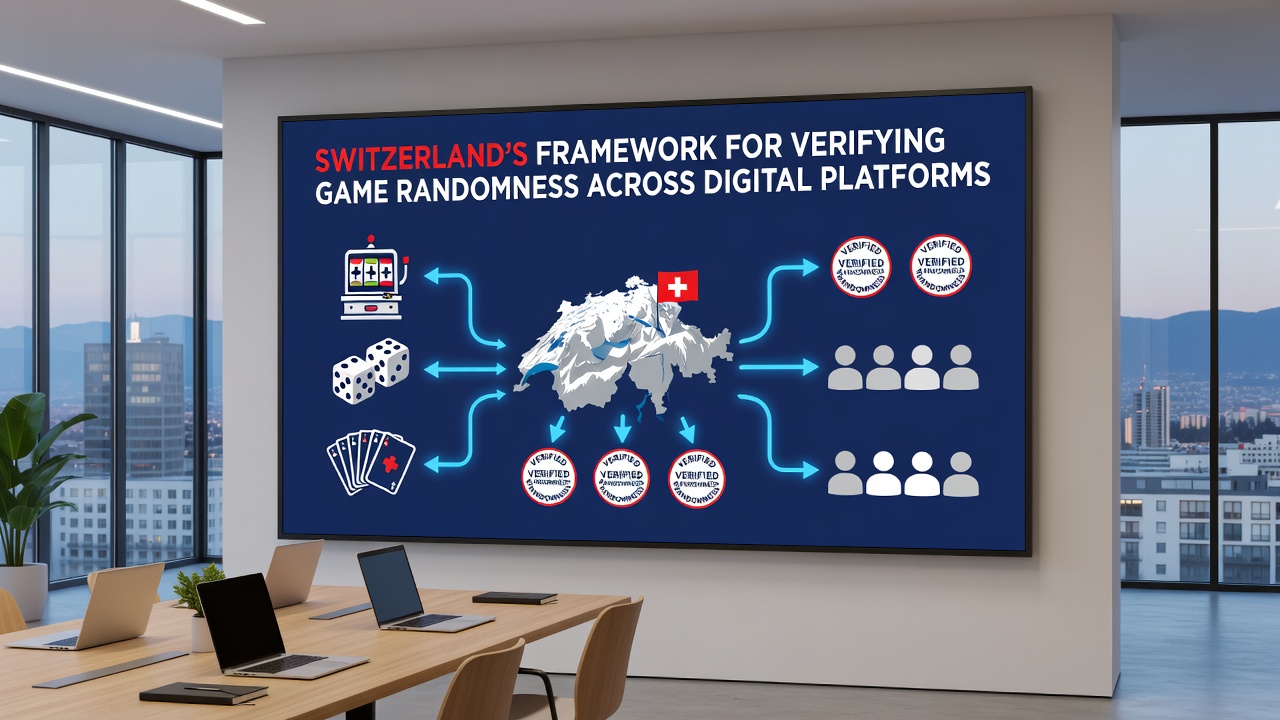
One case involved a platform that introduced a new slot title, where initial testing identified subtle bias in symbol distribution, and corrective adjustments were made before launch. Such examples illustrate how teh verification process catches issues early in development cycles. Platforms often schedule retesting after major software updates, because even minor code changes can affect generator behavior in measurable ways.
Compliance Across Digital Platforms
Digital platforms operating under Swiss licenses integrate randomness verification into their broader compliance frameworks, and they maintain audit trails that document generator performance over time. Regulators conduct spot inspections that include live sampling of game outcomes, and operators must provide access to raw data streams upon request. Studies found that platforms with robust internal monitoring systems tend to complete external audits more efficiently, though all licensed entities face the same baseline requirements regardless of size.
September 2026 saw the release of updated guidance documents addressing emerging platform architectures, including cloud-based gaming services, and these documents clarified expectations around remote testing capabilities. According to National Institute of Standards and Technology reports, the statistical methods used in Switzerland align closely with established randomness standards employed in other regulated markets. Platforms must also demonstrate that player interfaces display certified fairness information in accessible formats, which supports transparency for end users.
International Comparisons and Data Sharing
Switzerland participates in information exchanges with regulatory bodies from other regions, including agencies in Canada and Australia, to share findings on generator vulnerabilities and testing innovations. This collaboration helps identify patterns that might not surface in isolated national reviews. Industry associations contribute by publishing aggregated compliance statistics that exclude proprietary details, allowing broader sector analysis without compromising individual operator confidentiality.
One study revealed that joint workshops held in 2025 led to refinements in how Swiss testers evaluate hybrid random sources that combine physical entropy with algorithmic post-processing. Those who've examined the resulting datasets note improved detection rates for certain classes of anomalies.
Conclusion
Switzerland's approach to verifying game randomness across digital platforms rests on clear legislative mandates, accredited laboratory testing, and coordinated oversight that adapts to technological change. The system emphasizes documented procedures and periodic re-evaluation, which together support consistent outcomes for licensed operators. Continued alignment with international standards through data sharing further strengthens these domestic processes as new platform types enter the market.